
What would you do if you met a potential client at a trade show and then was shocked at the shape of his business when you met him the following week? If you’re like me, you help him succeed!
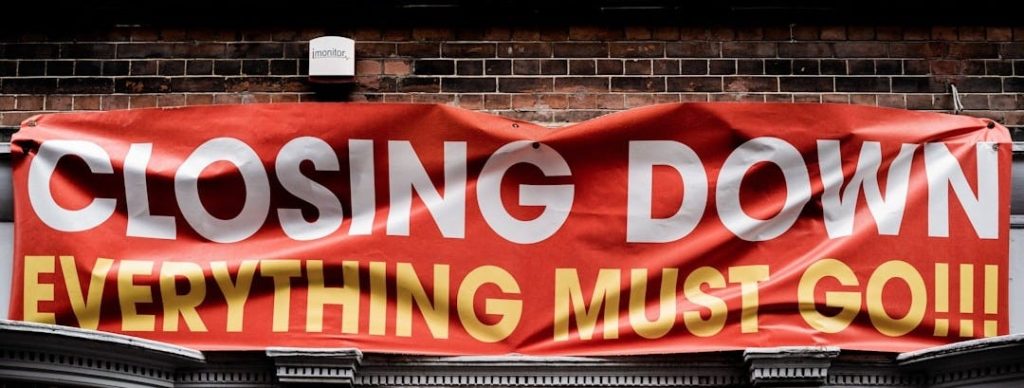
Photo by the blowup on Unsplash
I pulled up in front of the building and what I saw shocked me.
Maybe even stunned me a little bit.
I had met Harry the week before at a trade show. We were booth neighbors, so got to know each other throughout the day in between talking to attendees.
At the end of the day, Harry said his business was doing fine. But if I wanted to stop by next week he would show me around his printing company.
As The Business Coach, I was (and am) always interested in seeing new businesses and sharing my business knowledge and advice.
So what shocked me?
The giant “FOR SALE” sign with GIANT red letters.
Not As Fine As He Had Said
Of course, the first thing I asked Harry when he met me in the lobby was “Why is there a ‘For Sale’ sign in front of your business?”
“Well,” Harry said, “Things are not so good.”
He went on to explain his business’ cash flow problems. Basically, they were losing money and he was running out of funds to keep the business going. His accountant told him to sell the building to raise cash to keep the business going.
The “hope” was – and I use “hope” intentionally here, there was no plan – that things would turn around with a little bit more time.
After digesting this unexpected news, I asked Harry if we could look at his business together. I wanted to examine this business, like a doctor examines a sick patient – and this patient almost looked to be at death’s door.
Harry gave me a tour.
Beautiful printing presses; but only a few were running.
He introduced me to the few people that were still on the payroll; others had been laid off or had reduced hours.
Then we looked at the financials; current year through the past few years. The story was in these numbers.
Sales were decreasing each year while fixed costs continued at the same rate.
With sales decreasing, this increased his cost of printing each item. He was bleeding sales, but didn’t want to raise prices. Harry felt like he was on a sinking ship.
I told him to let me work on a plan and that I would come back in a few days.
The Business Coach Plan – You Can Turn This Around!
“First,” I said when I returned a few days later, “we take down that ‘For Sale’ sign and throw it in the dumpster. We can turn this business around.”
So I showed him my plan for his business turnaround. The plan included steps to make it profitable, have a positive cash flow, and bring back the employees that were laid off.
Harry was somewhat skeptical, but liked the plan.
The first step was that Harry had to be committed to this. There was going to be no turning back!
And while Harry wasn’t quite ready to throw the “For Sale” sign away, he did take it down and put it into storage with the promise that the sign would go in the dumpster when the plan started to work.
My one, solid precondition for working with someone: They must be committed and coachable.
Commitment secured, the real work began.
The first step was to examine and analyze his business. To do this, we relied on the tried-and-true SWOT Analysis to help identify his business’:
- Strengths
- Weaknesses
- Opportunities
- Threats
Strengths – Harry knew how to print. Run the machines, determine the best paper for the job, maintain the presses and keep everything neat and orderly.
Weaknesses – The presses were running only 50% of the time during the regular 40-hour work week. They did not have enough printing orders or sales to keep the production floor busy. Harry had to lay off some good people and was only able to offer reduced working hours to other employees.
His costs of doing business were higher than his revenues. This trend was getting worse every week, month, and year.
Opportunities – Every place you go in Massachusetts, you would see all kinds of printed items. From business cards, product and company informational brochures, books, business folders, envelopes, stationery plus more.
Threats – the economy on a whole was in a downturn. There were plenty of printing companies in the state. Harry liked to print, run the presses, run production, but he did not like to go out and sell. He did not have a strong sales force. He did not have the tools to manage the salesforce. Another big threat was that he was running out of money. He needed money to make payroll each week. He needed money to buy paper, supplies, and everything else to run the business. He needed money to make the monthly payments to the bank for his existing bank loans. The ship was taking on water and the seas were stormy.

That’s me in action, coaching everyone on improving business.
Implementing the Plan: Improving Sales and Identifying Target Markets
I met with the sales manager and sales team. I asked questions and tried to learn how they sell.
Selling is both an art and a science. There is the human side; people’s behavior and communication styles. I use a DISC Assessment to teach behavioral styles.
Then you need to understand why someone is buying something:
- What problem are you solving for them?
- What will this piece of printed paper do for them or their company?
- What is their return on investment if they purchase this printed item?
- Should this printed piece be black and white, full color, printed front and back or cut and folded in a particular way?
Once we answered these questions, Harry’s salesforce needed to understand the capabilities and strengths of the various print equipment. He had half-size presses. Envelope machines. His equipment was capable of full color to single color as well as monochrome. He also had binding equipment.
Harry and his team needed to understand the capabilities of his equipment to determine what types of print jobs his company could be competitive at.
Conversely, and as important, what business NOT to pursue because the costs were greater than the sales prices. After all, there’s no sense selling a printing job, getting the sale, and then losing money on the sale.
We quickly were able to decide what type of printing jobs we wanted and what jobs we did not want to accept.
This immediately started helping the bottom line.
But Harry’s printing company needed a lot more help.
We went through the records of his existing customers to see if they were a good fit.
Current customers that purchased the printed products that were profitable to produce were our A list.
Current customers that purchased printed products that we lost money producing, were moved to a “do not sell to” list. It’s hard to turn down business and income. But it’s also the only decision that makes business sense when you lose money on those deals.
Then we started making a target list of new potential customers that would be a good fit.
Harry’s printing company had never done business with the Commonwealth of Massachusetts. Through our research we saw that the Commonwealth buys a lot of printed material. Some of this printed material would be a perfect fit for the half-size presses.
I then developed a plan to teach the salesforce how to sell to the Commonwealth. The different divisions, buyers, RFP (Request for Proposal), and their purchasing systems. Essentially, how to become a vendor for the Commonwealth of Massachusetts.
We also started looking at not-for-profit industries. We all know how they send envelopes, return envelopes for donations, letters, and more. These items would fit perfectly on Harry’s envelope machine and one- and two-color small presses for stationery and letters.
Again, not for profits have their certain methods of purchasing. How they purchase. When they purchase. What they purchase. So we educated the sales team here too.
Now the sales department:
1. Was a trained salesforce
2. Knew the products to sell that would be profitable
3. Knew the products not to sell
4. Identified current customers that are a good fit
5. Identified current customers that are a bad fit as per profit
6. Identified new target markets
a. Commonwealth of Massachusetts
b. Not for Profits
7. Created sales force action plans as per how to target these target markets and customers
This is the end of part 1. In part 2, I’ll share how these foundational changes helped Harry turn-around his business. Click here to read Part 2; From Selling the Building to Building a Successful Print Company.
You don’t have to embark on this journey alone. I’m here to help. I can coach you to have a winning mindset for your business. Together, we can create a customized plan that sets you on the path to success.
I am beyond thrilled that the work I’ve done with my coaching clients led to me being named Management Consulting & Coaching CEO of the Year for 2024 (USA). Let’s get started making this year your best yet! Book a free coaching session today at The Business Coach – Michael Kaye – Coaching – Marketing – Sales.
Or, email me directly at Michael@TheBusinessCoach.com to share your goals and discuss how I can support you.
Let’s make this year your most productive and fulfilling yet!


