
Fine-tuning the sales approach to customers and a more streamlined reporting structure, plus snatching a whale client from 35 competitors, turned Harry’s company around. Here’s how.
The story so far . . .
Harry said his printing business was doing “fine”—until I pulled up to his building and saw a giant “For Sale” sign. Turns out, cash flow was a mess, sales were shrinking, and hope was the only plan.
But with Harry’s commitment, we got to work. We analyzed the business, identified its strengths and weaknesses, and focused on sales strategy: which jobs to pursue, which to walk away from, and how to train the sales team to land the right clients—including the State of Massachusetts and nonprofits. Click here to read Part 1, From For Sale to Company of the Year; A Coaching Success Story.
Now, in Part 2 of 2, I’ll show you what happened next—and how Harry went from nearly closing shop to winning Company of the Year.
With a trained sales force, NOW we were starting to sail to our success. .
We had done the hard work and knew for sure Harry’s ideal customers–businesses that used the type of printed material Harry’s shop could produce efficiently (and for a profit!).
To kick start sales, we set up sales campaigns to reach these customers. We were also alert to feedback. The best businesses are continually listening to and learning from customers about what they need so that we could better answer the question, “Why are you the best supplier for us?”
We used a combination of tactics:
1. Emails
2. Basic Mailings
3. Variable Data Printing mailings were created specifically for each recipient. With digital printing you can create specific pieces with their names, a picture of their hobby or favorite pet, and so many ways to stand out.
4. We also called on them in person. Nothing beats the personal touch. In fact, one of my best salespersons had their favorite expression, “you can’t go trick or treating by phone.” You must knock on their door.
5. We knocked on a lot of doors.
6. We did trade shows
7. Networking events
It was a comprehensive action plan that created results.
As you know, I’m a huge believer in going above and beyond – going that extra step. So we knocked on a lot of doors even when the weather was horrible in Massachusetts. Our competition wasn’t often out in bad weather. This gave us another advantage: we worked harder and smarter than our competition.

Photo by Mauro Gigli on Unsplash
Going After 3 Target Markets
Now we had three target Markets to focus on.
1. Private businesses
2. The Commonwealth of Massachusetts
3. The Not-for-profit industry
Because of the horizontal nature of printing, we were able to go after any private businesses that met our criteria (we could help them while turning a profit!).
Doing business with The Commonwealth of Massachusetts was a little bit more complicated. I could write an entire post (or even a series) about how to sell to the state government, but I’ll keep it short here.
We learned what a vendor must do; completed all of the paperwork; and received our vendor number.
By itself, the vendor number doesn’t automatically make you successful or bring in business. All it does is get you a ticket to the party to bid on Request for Proposals. You still have to earn the business.
All of you reading have received a non-profit donation letter. Non-profits are GREAT customers for printing companies as they send printed envelopes, return envelopes, return envelopes for donations, letters, and more. All of these items fit perfectly on Harry’s envelope machine, along with his one- and two-color small presses for stationery and letters.
While not as complicated as selling to the state government, the not-for-profit industry has its purchasing quirks around how, when, and what they buy.
When Harry landed this whale of a client, we knew his business was well on the way to success!
Landing a Whale – and a Bunch of Other Fish
The plan started working.
- Our target private business sector print business started growing.
- Our Not-for-profit target business sector started growing. In fact, we became the main supplier for Boston ABCD, Action for Boston Community Development.
- We started to do business with The Commonwealth of Massachusetts.
- We won some small opportunities to print for the Commonwealth of Massachusetts. Business cards, letterheads, envelopes. We were starting to get our foot in the door and showing the print buyers our quality, our on time delivery, and our competitive pricing.
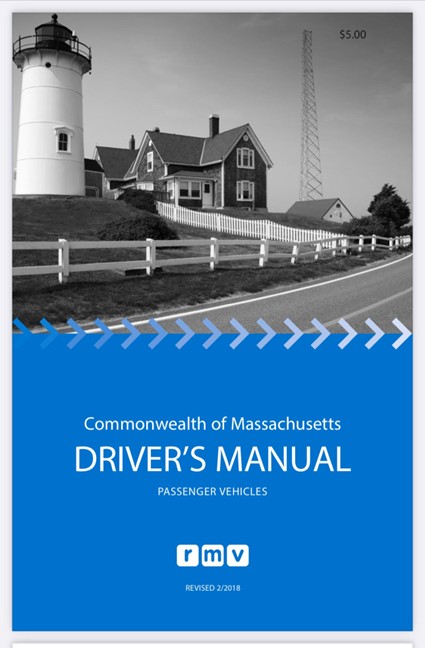
- Then, a Request for Proposal came out to print the Drivers Manuals for the Commonwealth. This RFP was for tens of 1,000s of manuals that were each 175 pages.
- We went to the bidders conference where they explained the bid in detail. Us, and 35 other printing companies.
3.3.1. We then started working on the bid. Cost of paper, production, timing of delivery, and delivery of the manuals to all of the Registry of Motor Vehicle locations. Everyone else was looking at their costs. We had to think beyond that – how do we go that extra mile to stand out? Paper was the same. Production costs were all in the same ballpark. We were able to reduce the costs of delivery of the manuals to each location, 30 locations throughout the state, by using a small, privately owned, low-cost trucking company. This reduced the price of each manual by a sizable amount. The other printers couldn’t understand how we were able to get the price so low. (We never told them, until today, in this newsletter.) We won the contract and delivered the manuals, on time, the finest quality, and at an amazing price. We were so good that the Commonwealth used Harry’s printing to print the drivers manuals for many years. Truck loads and truck loads of manuals, delivered throughout the state.
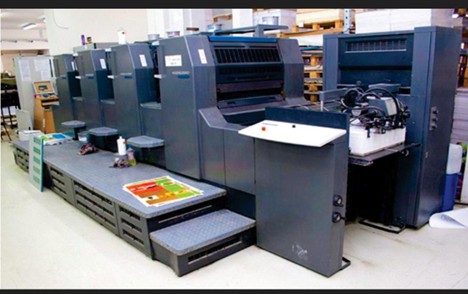
Example of a half-size offset press, the kind of press used for the Drivers Manuals.
And the production floor was busy.
Things got so busy we had to create a plan to work with Harry’s vendors to ensure the flow of supplies until revenue rose to a stable (and much higher) level.
As sales increased, Harry needed money to buy paper to produce the orders. We had been very up front and open with Harry’s vendors from the start of our turn around program.
We showed them our financials; we showed our plan and we said that cash will be tight. By being open, honest, and communicating with our vendors; they gave us extended terms to pay for the paper.
They saw a business plan.
They saw the plan being worked.
They had confidence in Harry’s printing.
We had the same conversations with the banks. Some banks understood and went along with our plan and revised the payment structure. Some banks did not. Much like selling to states, I could write another newsletter on banking, but let’s save that for another day.
Learning How to Run a Business
Harry was a great printer. He was not a great businessman. Which isn’t uncommon – many people start businesses because they love what they do. That doesn’t always mean they also know how to treat their passion like a business.
It was time for Harry to learn how to run his business versus his business running him.
Harry’s cash flow steadily improved.
And kept improving.
Within weeks, Harry was running a full eight-hour shift, five days a week.
After one year Harry was running two shifts.
By year three, Harry was running three shifts. That formerly “for sale” building was now bustling with 24×7 production.
Harry was able to bring back employees that he previously laid off.
An organizational chart created the space for that continual growth.
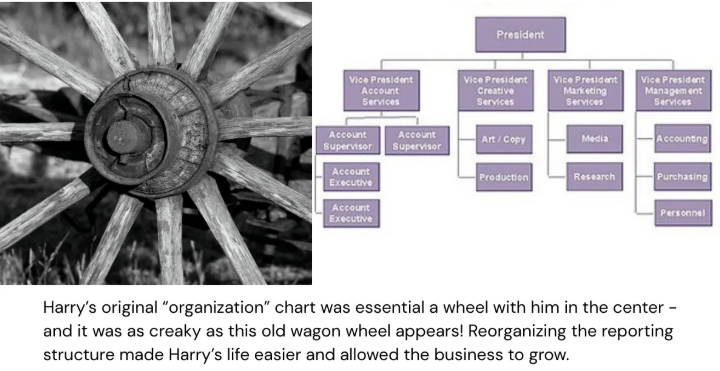
His original “organizational” chart looked like a bicycle wheel with a bunch of spokes and Harry in the middle. As the center of the hub, every single employee came to Harry with every single question.
Many business owners fall into this trap of placing themselves at the center of all decisions. This sucks up their time and energy on minute details when they should be focused on the bigger picture.
So we created a new structure.
Now, with only four direct reports, Harry was able to have the time to think and do his work. Everyone else now had a clear understanding of who they were managed by and reported to as well as specific duties and responsibilities that they could take ownership of.
The chart was broken down into:
- Overall management
- Finance
- Sales
- Marketing
- Production
1. Production shift 1
2. Production shift 2
3. Production shift 3 - Duties and responsibilities.
- Who reports to who.
Now Harry was running a nice size business.
And he did eventually throw that for sale sign into the dumpster.
From being on the verge of going out of business, Harry:
- Bought a vacation home for his family.
- Bought a boat. I also helped him learn the maritime rules of the road, since I am also a licensed USCG Captain.
- Received The Vendor of The Year Award from The Commonwealth of Massachusetts.
From being on the verge of going out of business, to becoming recognized as the best vendor for The Commonwealth of Massachusetts; that’s the power of focused coaching and the willingness to get down and dirty to create success.
Wrestling Wrapup
Allow me to share two notes from wrestlers I coached this year. I thoroughly love and enjoy passing on my knowledge and experience to these young athletes. It’s a joy to watch them grow. It’s also a lot of fun!
You can read about my wrestling journey and how it continues to infuse my life here.
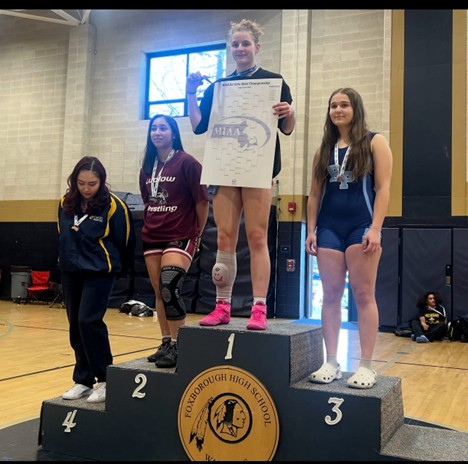
The first note is from Tessa. When she tried out for the team as a freshman, she weighed in at 185 pounds, overweight for her height. She worked hard, studied wrestling, and lost weight. By her junior year, she had improved enough to win the state championship. This year (her senior year) she became a two-time state champion at the 145 LBS weight class. She will be wrestling in college next year.
“Dear Coach Kaye: It has been an honor to be coached by you. Learning how to study film, write in my note book, and keeping a healthy mindset have been a key to my success, and all traits I will be taking to college. Working with you has helped me grow so much as a wrestler. You are always answering questions, no matter how small or pointless. Thank you so much for investing your time into me over the past few years. I am truly grateful for it.”
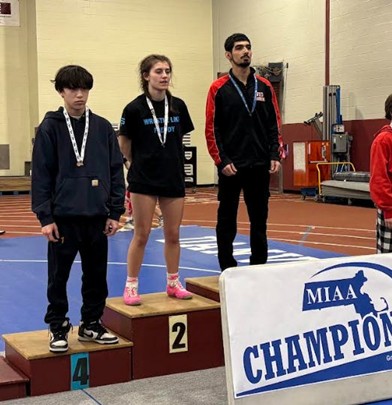
The second thank you note that I would like to share is from Fahad. He is a junior who joined the team this year and had never wrestled before. Fahad didn’t know a thing at the beginning of the season. But he worked hard, studied, and, at the end of the season, he won the State Championship.
“Thank you so much Coach Kaye, for all the help and support from you and Coach Russo. I feel incredibly lucky to have a coach like you. I am extremely excited for next year’s wrestling season. Wishing you a great night, Coach, thank you for everything. I’ll always be grateful to you.
You don’t have to embark on this journey alone. I’m here to help. I can coach you to have a winning mindset for your business. Together, we can create a customized plan that sets you on the path to success.
I am beyond thrilled that the work I’ve done with my coaching clients led to me being named Management Consulting & Coaching CEO of the Year for 2024 (USA). Let’s get started making this year your best yet! Book a free coaching session today at The Business Coach – Michael Kaye – Coaching – Marketing – Sales.
Or, email me directly at Michael@TheBusinessCoach.com to share your goals and discuss how I can support you.
Let’s make this year your most productive and fulfilling yet!


